|
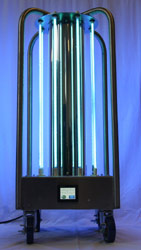 Mobile UV Room Sterilizer MRS33-8 uses 360 degree safety motion sensors and features eight 33" UVC lamps optically centered around a highly polished reflector for maximum germicidal UV intensity. System controls are
located directly on the unit, which allows utilization of a touch-screen with 3 pre-programmed disinfection cycles, and the option to manually set disinfection time. Mobile UV Room Sterilizer MRS33-8 uses 360 degree safety motion sensors and features eight 33" UVC lamps optically centered around a highly polished reflector for maximum germicidal UV intensity. System controls are
located directly on the unit, which allows utilization of a touch-screen with 3 pre-programmed disinfection cycles, and the option to manually set disinfection time.
These mobile ultraviolet units utilize eight UV lamps and are designed for operating rooms, sterile areas, laboratories, unoccupied patient rooms, clean rooms and all other applications where permanent
UV fixtures are not practical. Each mobile UV unit is equipped with casters for maximum portability.
Why it is important to disinfect surfaces with germicidal UV
1. Bacteria, including VRE, MRSA, TB, C.diff, and viruses can survive for a long time on contaminated surfaces.
2. These pathogens are frequently found in patients with nosocomial infections.
3. In hospital environments, surfaces with which hands come in contact are often contaminated with nosocomial pathogens, and may serve as vectors for cross-transmission.
4. Contaminated hands can transfer germs to five more surfaces or 14 other subjects and can also recontaminate a clean surface.
5. There is overwhelming evidence for low compliance of healthcare workers with hand hygiene (about 50%), therefore all contaminated surfaces must be properly cleaned and disinfected.
Mobile UV System Features:
- 304 stainless steel body
- 360-degree motion sensor for automatic shut-off
- Large, high quality, locking casters for ease of transport
- Universal power input 120/220V, 50/60Hz
- Formed stainless tube structure protects lamps and improves ability to handle
and transport the unit
- Access panel for ease of maintenance
- Touch-screen controller with preset and manual disinfection
- 15 foot power cord (longer power cord available upon request)
- Remote key fob on/off
Mobile UV System Technical Specs:
- Weight: 85lbs
- Dimensions: 47”H x 20”W x 20”D
- UV Lamps: GML100 x 8
- Electrical Requirements: 4Amp @ 120V or 2.2Amp @ 220V
Fomites and Infection Transmission
German researchers found that viruses and bacteria, including VRE, MRSA, TB, C.diff and
Streptococcus can survive for months on dry surfaces. These pathogens are frequently found in patients with nosocomial infections. In
the hospital environment, surfaces with which hands come in contact are often
contaminated with nosocomial pathogens, and may serve as vectors for
cross-transmission. Contaminated hands can transfer germs to five more
surfaces or 14 other subjects and can also be the source of recontaminating
the surface.
"Compliance rates of healthcare workers in
hand hygiene are known to be around 50%. Due to the overwhelming evidence of low
compliance with hand hygiene, the risk from contaminated surfaces cannot be
overlooked.” said the researchers.
Full text »
|



 UV PRODUCTS
 Contact American Air & Water for Mobile UV Room Sterilizers Prices